Florida Building Code 2026 vs 2023: What's New for Pinellas Residential Remodels
This guide focuses on Pinellas residential remodel impact. For the broader 9th Edition change-list, see our companion piece 2026 Florida Building Code Changes.

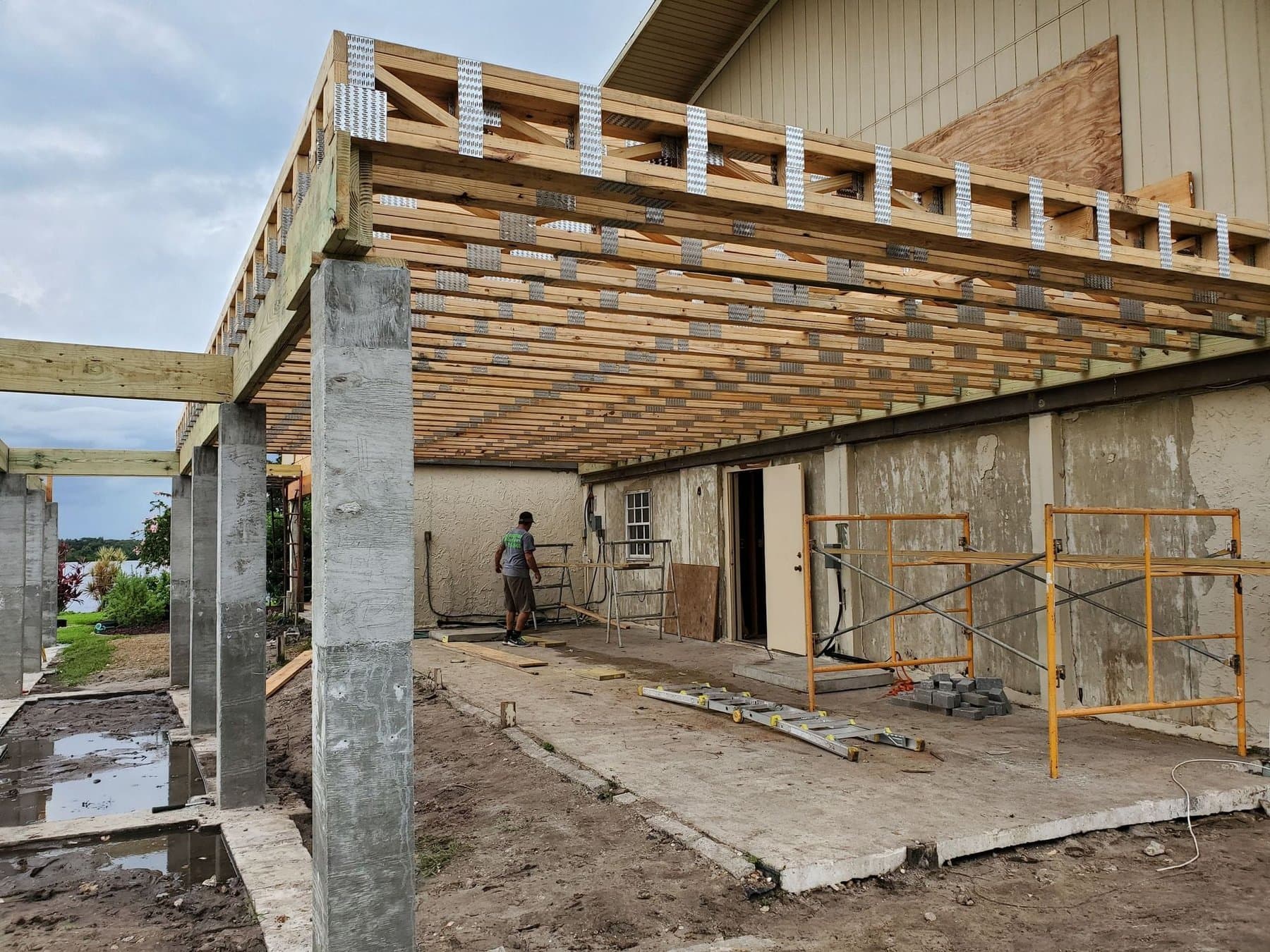
The Florida Building Code (FBC) 9th Edition is Florida's statewide construction rulebook, effective December 31, 2026, replacing the 8th Edition (2023). For Pinellas County remodels and new builds, the 9th Edition tightens wind-load calculations (ASCE 7-22 replaces ASCE 7-16), expands the 160 mph impact-resistant envelope requirement to new construction within five miles of tidal water, and updates Florida Product Approvals (NOAs) on windows, doors, and roof assemblies. Permits applied for and issued before December 31, 2026 remain under 8th Edition rules for the life of that permit.
If you're planning a remodel or new build in Pinellas County, the Florida Building Code (FBC) you're permitting under is about to change. The 9th Edition of the FBC is on track to take effect at the end of 2026, replacing the 8th Edition (2023) that's currently in force. For homeowners, the practical question isn't "what is FBC 2026?": it's "does my project get the old rules or the new ones, and what costs more under the new ones?" Here's the plain-English read for Pinellas remodels, with verification flags where the published code text isn't fully out yet.
What's New in FBC 2026 vs FBC 2023
The Florida Building Commission updates the code every three years. The 8th Edition (FBC 2023) took effect December 31, 2023 and is still the active code as of mid-2026 (floridabuilding.org). The 9th Edition: referred to in industry shorthand as FBC 2026 is scheduled to take effect December 31, 2026 per the Florida Building Commission's 9th Edition workplan. Final rule text is being finalized; some details below may shift before adoption.
Three broad shifts matter for residential remodels in Pinellas:
- Updated reference standards. The 9th Edition is expected to pull from the 2024 I-Codes (IBC, IRC, IECC, IMC, IPC, IFGC): replacing the 2021 I-Codes that anchor the 8th Edition. Confirm final reference cycle in the adopted rule.
- ASCE 7-22 wind loads. ASCE 7-22 replaces ASCE 7-16 as the structural loading standard. New wind-speed maps, recalculated component and cladding pressures.
- Legislative add-ons. Recent Florida legislative sessions added mandates (expanded high-wind envelope, hardened roofing, flood-resistant construction tie-ins) that the 9th Edition codifies. Specific HB/SB references will be cited in the final adopted rule.
For a Pinellas remodel, the biggest cost-of-compliance levers will be wind/impact products, energy code, and, for anyone in a flood zone, flood-resistant construction.
Wind Load and Impact Resistance Updates
Pinellas County sits in a high-wind, coastal-exposure region. Under the 8th Edition, design wind speeds across the county generally fall in the 150–160 mph range depending on exposure, risk category, and parcel-specific ASCE 7-16 contour values (always verify against the engineer's site-specific wind calc). Under ASCE 7-22, the maps shift, meaning the design pressures your windows, doors, garage doors, soffits, and roof edges have to meet may be higher than they were the day before.
Three things this changes for a remodel:
- Window and door replacements. If you're swapping out windows during a kitchen, bathroom, or whole-home remodel and pulling the permit after the 9th Edition effective date, the new product approvals (Florida Product Approval / NOA = Notice of Acceptance) must meet 9th Edition pressure ratings, not the 8th Edition ones the same product was rated for last year.
- Roof work. Re-roofs and structural roof modifications hit updated uplift and edge-zone calculations under ASCE 7-22.
- Additions. Any new wall, new opening, or new roof plane is engineered to the code in effect when the permit is pulled.
Coastal homeowners, broadly anywhere along the Pinellas Gulf and bay frontage, should expect tighter envelope requirements once the 9th Edition's adopted maps are published.
Energy Code Updates
The Florida Energy Conservation Code is the section of the FBC that governs insulation, fenestration U-factors and SHGC (Solar Heat Gain Coefficient), HVAC efficiency, duct sealing, and air leakage testing. The 9th Edition is expected to align with the 2024 IECC, which generally pushes residential efficiency requirements tighter than the 2021 IECC the 8th Edition references. Specific R-value, U-factor, and SHGC thresholds will be set in the adopted Florida Energy Code 2026.
For a remodel, this most often shows up in:
- Window U-factor and SHGC ratings required for replacement glazing.
- Insulation R-values in any wall, ceiling, or floor cavity opened up during the project.
- Duct testing and blower-door testing thresholds, where applicable.
If you're replacing more than a defined percentage of your fenestration or opening up exterior wall cavities, the energy code applies to that work even on a remodel.
Plumbing, Electrical, and Mechanical Changes Affecting Remodels
The FBC bundles plumbing (FPC), mechanical (FMC), and fuel gas (FFGC) codes, plus references the National Electrical Code (NEC) for electrical. Under the 9th Edition, expect:
- NEC cycle update: the 9th Edition is expected to reference a newer NEC cycle than the 8th Edition's NEC 2020. Confirm the specific cycle in the adopted rule before relying on it for design.
- AFCI / GFCI scope expansions in kitchens, bathrooms, laundry, and outdoor circuits, consistent with newer NEC cycles.
- Mechanical efficiency and refrigerant transitions: federal A2L refrigerant requirements already in motion will keep shaping HVAC specs.
- Plumbing: updated fixture-flow and backflow provisions consistent with the 2024 IPC base, as reflected in the adopted Florida Plumbing Code chapter.
For most kitchen and bathroom remodels, the practical impact is at the outlet and circuit level: more circuits required, more GFCI/AFCI protection, and updated equipment specs.
Flood-Resistant Construction (FBC + ASCE 24)
If your home sits in a FEMA-mapped Special Flood Hazard Area (SFHA): AE, VE, AO, or Coastal A. The FBC's flood provisions tie directly to ASCE 24, the standard for flood-resistant design. The 8th Edition references ASCE 24-14; the 9th Edition is expected to reference the newer ASCE 24-24 cycle (published 2024), which expands the regulated flood hazard area and sharpens requirements for finished floor elevation, flood-resistant materials below design flood elevation, and mechanical/electrical equipment placement. Confirm the exact ASCE 24 edition cited in the adopted 9th Edition rule.
For a Pinellas remodel in a flood zone, that can affect:
- Finished floor elevation for additions or substantial improvements.
- Material selection below design flood elevation (concrete, treated lumber, closed-cell foam, marine-grade specifications).
- HVAC, water heater, and electrical panel placement: elevated above design flood elevation, not in flood-prone garages or crawl spaces.
For a full breakdown of Pinellas flood zones and what they mean for construction, see our Pinellas County flood zone guide and flood-zone projects service page.
When 2026 Code Applies vs When 2023 Grandfathered
The trigger is the date your permit application is accepted as complete, not the date you sign a contract, not the date you start construction. As a general rule:
- Permit application complete before December 31, 2026 → project generally proceeds under FBC 2023 (8th Edition).
- Permit application complete on or after the 9th Edition effective date → project proceeds under FBC 2026 (9th Edition).
Florida historically allows a transition window where either code may be applied for certain in-progress applications, and local jurisdictions can vary slightly on how they treat them: confirm the exact transition language with your Pinellas County or municipal building department once the 9th Edition is adopted. If you're considering a 2026–2027 project, the permit-application date matters more than the design date.
How Revolution's Licensed Staff Stays Current
Revolution is a Florida-licensed general contractor: CRC1331628 (Certified Residential Contractor) and CGC1522463 (Certified General Contractor). License-holders carry continuing-education requirements under Florida statute, which means staying current on each FBC cycle is part of the license, not an add-on service.
What that means for you:
- Code-driven cost line items are visible. Revolution prices on Time & Materials (T&M) with open-book pricing, when a product spec changes because of a code update, the line item shows on the budget. You see what the code change cost, not a marked-up bundle.
- 20+ W-2 carpenters on payroll. The crews framing, finishing, and detailing your project are Revolution employees, not rotating subs: same hands that worked under the 8th Edition will work under the 9th, with the same training pipeline.
- Pinellas remodel and new-build experience. Coastal exposure, flood zone work, and Pinellas permit offices are routine, not first-time.
FAQs
When does FBC 2026 take effect?
December 31, 2026 is the scheduled effective date for the 9th Edition per the Florida Building Commission workplan. Confirm against floridabuilding.org once the Commission publishes the final adopted rule.
Do existing permits get grandfathered to FBC 2023?
Generally yes: a permit application accepted as complete under the 8th Edition is processed under the 8th Edition. Local jurisdictions can vary slightly. Confirm with your Pinellas County or municipal building department before assuming.
Does FBC 2026 change anything for a kitchen remodel?
Often yes, in three places: window/door product approvals (if you're replacing any glazing), electrical (AFCI/GFCI scope and circuiting), and energy code (insulation and fenestration ratings on opened wall cavities). The specific cost impact depends on the scope of work: replacing just cabinets and countertops won't trigger most of these; opening exterior walls or replacing windows will.
What's the impact on flood-zone construction?
If your home is in an SFHA, the 9th Edition's expected reference to ASCE 24-24 sharpens finished-floor elevation, flood-resistant materials, and mechanical placement requirements. For substantial improvements (work valued at 50% or more of pre-improvement structure value federally, or 49% in St. Petersburg), the whole structure can be required to meet current flood-resistant standards.
How does FBC 2026 affect insurance discounts?
Florida insurers use FBC compliance, opening protection, and roof attributes for wind mitigation credits via the OIR-B1-1802 inspection form (the current Uniform Mitigation Verification Inspection Form on file with the Office of Insurance Regulation). Newer-code construction typically scores better on mitigation factors, which can reduce wind premiums. Confirm the current form revision and discount schedule with your insurer at policy renewal.
Does the FBC 2026 change anything for vacation-rental properties in Pinellas barrier islands?
Yes, in two ways. First, the 9th Edition's tighter wind and flood-resistant construction standards apply to any barrier-island vacation rental you permit under the new code: a Clearwater Beach cottage, an Indian Shores duplex, or a Redington Beach single-family rental sees the same ASCE 24-24 flood-resistant requirements and ASCE 7-22 wind pressures as an owner-occupied home. Second, if your remodel scope triggers the FEMA 50% Substantial Improvement rule on top of the code cycle change, the entire structure has to meet 9th Edition standards, not just the improved portion. See our vacation-rental 50% rule guides for Clearwater Beach, Indian Shores, and Redington Beach for the math on how those triggers combine with barrier-island BFEs and jurisdiction-specific freeboard.
If you're weighing a 2026 or 2027 project, the smart move is to scope and price now so you can decide whether to pull a permit under the 8th Edition or design intentionally to the 9th. Revolution handles both: see home remodel for existing-home work or custom home for new builds. Call (727) 888-6161 for a free 48-hour estimate.
Ready to Start Your Project?
Get a free estimate within 24 hours