What St. Pete Remodels Actually Pencil: A Resale-Value Reality Check

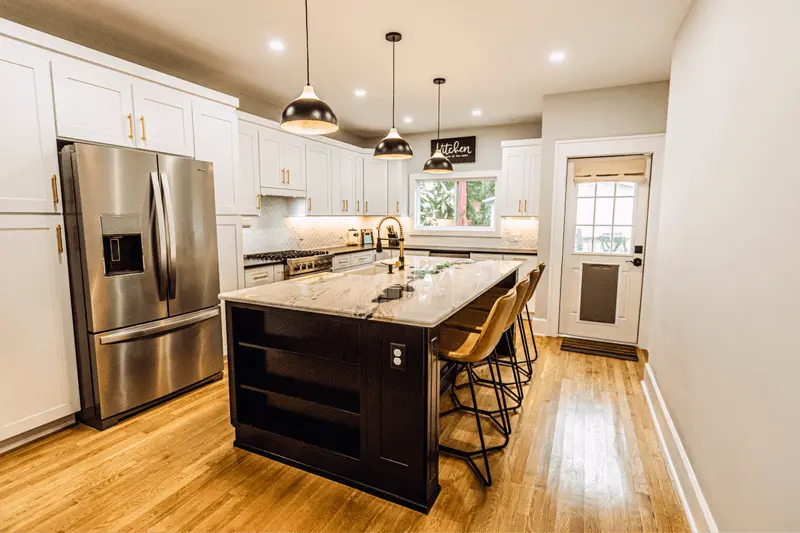
Most "home remodels that add value" articles are listicles ranking projects by national ROI percentages. Those numbers come from one or two sources — Remodeling Magazine's annual Cost vs. Value Report and the National Association of Realtors' Remodeling Impact Report — and they're regional averages, not St. Pete numbers. The Pinellas housing stock, flood zones, HOA constraints, and buyer demographics shift which remodels actually pencil here.
This guide covers what the verifiable Cost vs. Value data says (with citations), where the published numbers hide trade-offs, and what we see on Pinellas jobsites that doesn't show up in a national average. We're a St. Petersburg general contractor — Revolution Contractors — and our remodel work is mostly Old Northeast, Snell Isle, the beaches, downtown condos, and similar Pinellas neighborhoods. Where the resale-ROI data conflicts with what we see on a jobsite, we'll flag it.
What this guide is NOT
Before we get into the data, two clarifications:
- This is not a "best 10 remodels" ranking. Resale ROI varies by neighborhood, buyer pool, finish tier, and home age. A national listicle picking "the top 10 ROI remodels" can't tell you what your specific St. Pete house needs. Anyone who can give you that ranking without seeing your house is selling you something.
- We're not a real estate agent or appraiser. A general contractor can tell you what the Cost vs. Value data says, what we see on Pinellas jobsites, and what a remodel costs to build. A licensed appraiser tells you what your specific house's after-repair value will be. A real estate agent tells you what buyers in your neighborhood actually pay for. Both of those conversations belong upstream of any remodel decision.
What follows is the construction-side reality check: which remodels show up consistently in Cost vs. Value, what we see them cost in St. Pete, and where the trade-offs are.
What the Cost vs. Value Data Actually Says (and What It Hides)
Two recurring data sources drive every "home remodels that add value" article you'll find online:
- Remodeling Magazine's annual Cost vs. Value Report. Published every year since 1988, broken out by US region (South Atlantic covers Florida) and 23 project types. Each project gets a "cost recouped" percentage based on what national appraisers say it adds to a home's resale value.
- The National Association of Realtors (NAR) Remodeling Impact Report. Surveys both REALTORS and homeowners; reports both a recovery percentage AND a "Joy Score" — a 1-10 measure of how happy homeowners are with the remodel after the fact.
Both are useful starting points. Both have important limitations on a St. Petersburg resale:
- Regional averages, not local. South Atlantic averages blend Miami, Atlanta, Charleston, Tampa Bay, and Charlotte. The Pinellas resale market behaves differently — flood-zone buyers, condo HOAs, and historic-district buyers all weight remodels differently than the regional average.
- Midrange vs. upscale tiers don't match real-world St. Pete budgets. Cost vs. Value defines a "midrange kitchen" at roughly $80,000 (2024 South Atlantic). Per Jeremy on St. Pete kitchen budget reality: "an entry-level basic RTA cabinet setup might be in the $40,000 to $60,000 range for the kitchen, and then $75,000 to $100,000 and up for a larger, nicer kitchen. It's not uncommon for a luxury kitchen to spend $30,000 to $50,000 in appliances alone." The midrange tier captures part of the St. Pete market; the upscale tier captures the Old Northeast / Snell Isle / waterfront-condo market that dominates a lot of Revolution's work. Quoting one ROI percentage across both is misleading.
- Recoup percentage is appraiser-estimated, not transaction-verified. Cost vs. Value's recovery percentages come from REALTOR + appraiser surveys, not actual sales-price-vs-cost analysis on the same houses. The methodology is well-documented; the limitations are real.
The honest summary: use the Cost vs. Value Report as a starting frame for which categories of remodel tend to recover their cost. Don't quote a single percentage as gospel for your specific St. Pete house.
Why St. Pete Remodels Don't Follow the National Averages
Pinellas County's housing stock and buyer pool are different enough from the South Atlantic average that the recoup percentages shift project by project. The patterns we see consistently:
- Pre-1990s housing stock dominates the older neighborhoods. Old Northeast, Kenwood, Old Southeast, Crescent Lake — all bungalows, craftsman, and Mediterranean revival from roughly 1910-1940. Per Jeremy on what that means for a kitchen: "a lot of the times in St. Petersburg, where we do most of our work, we see small cramped kitchens, old galley kitchens that sit on the back of the house. A lot of times, we saw one today that had the kitchen stuffed onto what used to be, I think, a sleeping porch, so it was part of an addition with a sloped floor, and the kitchen itself was an afterthought." These houses don't carry national-average ROI numbers because the structural rework before you even start cabinetry shifts the cost base.
- The 1990s pivot in kitchen design. Per Jeremy: "the biggest problem we have is that kitchens from before about the 1990s were created for utility — to prepare food and store food — and since then, they've become a focal point of entertainment in the house. So for us insane people, our biggest problem is that we're actually trying to change the whole concept of the kitchen and bring it up to modern standards, which means a lot of times we've got to make the kitchen larger — blow out walls, make structural changes, move plumbing and electrical." When the project goes from "freshen up" to "structurally reconfigure," the resale ROI calculation shifts because the cost base shifts.
- FEMA 50% rule constrains flood-zone houses. Per Jeremy: "The 50 percent rule for flood-zone properties — you can only improve up to 49 percent of the building's value (excluding land)." Houses in VE / AE zones (most of Shore Acres, Snell Isle waterfront, Bahama Shores, Tierra Verde, the beaches) face a hard cap on improvement value before triggering full FEMA-compliance elevation requirements. That cap reshapes which remodels are even legal — let alone which pencil.
- Buyer pool varies sharply by neighborhood. A Downtown Dweller condo buyer values different remodels than an Old Northeast Veteran Sophisticate. Cost vs. Value's regional average flattens that. A finish tier that signals "premium" downtown signals "over-improved" in mid-Pinellas.
- Pinellas permit timelines add weeks to almost every scope. Per Jeremy: "Permitting in Pinellas County depends on the municipality — in St. Pete, which is our most common building department, a kitchen permit might take anywhere from two to five weeks, which is silly — it should be over-the-counter same day, but it's not." Permit drag adds carry cost — mortgage, taxes, insurance during the project — that the Cost vs. Value model doesn't include.
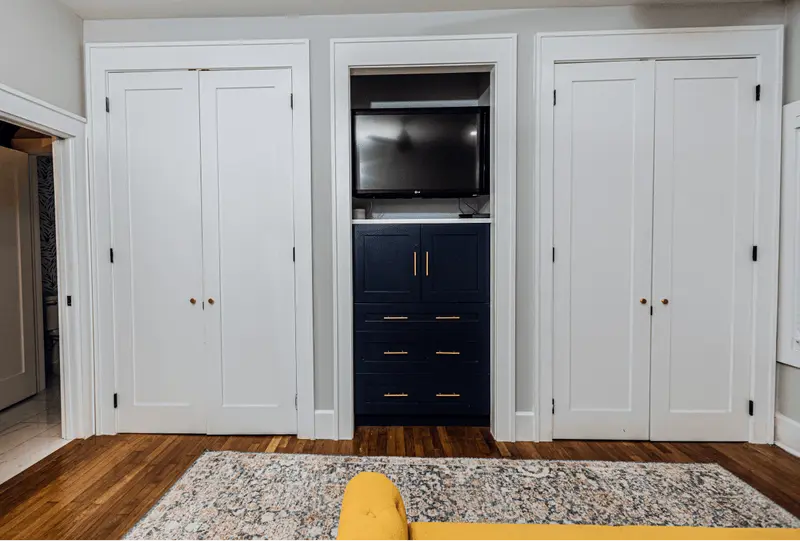
The Remodels That Consistently Pencil in Pinellas
Setting aside the listicle ranking format, the remodels that show up at the top of both Cost vs. Value's South Atlantic recoup data AND what we see actually pencil on Pinellas resales:
- Kitchen refresh (not full gut). Cabinet refacing, new countertops, new appliances, new lighting — without moving plumbing or walls. Per Jeremy on the tiered intervention strategy: "We can always replace cabinet doors or, um, paint cabinet doors and leave countertops in place. We can always just change out appliances. Um, but you know, if multiple parts of that are past their prime and due for an update, then that's when you would do a full kitchen." The refresh recoups a higher percentage than the full structural gut on a pre-1990s house, because the cost base stays low. Cost vs. Value's "minor kitchen remodel" line item is the closest national analog. See kitchen scope details for what we do on a kitchen.
- Midrange bathroom remodel. New vanity, new tile, walk-in shower swap-out, ventilation upgrade. Cost vs. Value's midrange bathroom recoup typically lands in the 65-75% range. In Pinellas, the variance comes from the cast-iron plumbing surprise — covered below. See bathroom scope and cost reality.
- Garage door replacement. Cost vs. Value has consistently ranked garage door replacement at or near the top of the recoup table for several years (often 90-100%+). It's a curb-appeal upgrade with a low cost base. Pinellas-specific: hurricane-rated impact garage doors carry a higher cost but contribute to wind-mitigation insurance discounts, which adds a downstream value component.
- Exterior + curb appeal. Fresh paint, new entry door, landscaping refresh. Cost vs. Value's "siding replacement" and "front entry door" categories both consistently recoup 70%+. In St. Pete, an exterior refresh on a 1920s Mediterranean revival or a 1940s Florida ranch reads as care + maintenance, which buyers price into the offer.
- Energy efficiency upgrades that double as hurricane prep. Hurricane-rated impact windows do double duty — wind mitigation + insulation + insurance discount. Cost vs. Value's window replacement category is one of the more reliable recoups (typically 65-75%). In Pinellas, the additional insurance-premium reduction (often documented via wind-mitigation inspection per Florida Building Code 2023) creates downstream cost savings the national ROI calculation doesn't include.
Common thread: each of these remodels keeps the cost base low enough that the recoup percentage isn't fighting a structural-rework drag.
The Remodels Where the Published ROI Numbers Hide Trade-offs
Several remodels show up in national listicles with high ROI percentages but have important Pinellas-specific trade-offs the article doesn't mention:
- Attic or basement conversion. Roughly half of "10 best ROI remodels" articles include this. St. Pete has near-zero basements — the water table doesn't allow them. Attic work is constrained by truss type — most pre-1990s St. Pete houses have stick-framed attics that are convertible; most 1990s+ tract houses have engineered trusses that aren't, without significant structural rework. The published ROI percentage on attic/basement conversion doesn't apply to most Pinellas houses.
- Full kitchen-and-bath whole-house gut. Cost vs. Value has a "major kitchen remodel" upscale tier that lists 50-60% recoup. The reality on a pre-1990s St. Pete house is that the cost overrun risk is disproportionately high. Per Jeremy: "Things that typically cause kitchen budgets to go over — one of the largest ones that we have is when we get into the plumbing. If we don't know the plumbing in the house and there's 80 years of bacon grease and cast-iron plumbing, a lot of times it's the right time to upgrade the plumbing, potentially all the way to the street, which can add $10,000 to $20,000 real quickly." That cost-overrun risk drags the actual recoup percentage well below the published number.
- Pool addition. National ROI estimates run 50-65% on pool installs. The Pinellas trade-off is insurance premium increase, ongoing maintenance cost, screen-enclosure salt-corrosion replacement cycle, and pool-barrier code compliance. Most agents we work with say a pool is a lifestyle decision, not a resale decision.
- Master suite addition. Cost vs. Value's "master suite addition" upscale tier lists 50-55% recoup nationally. In Pinellas flood zones, the addition can trip the FEMA 50% rule — improvement value exceeds 50% of structural value, which forces full FEMA-compliance elevation on the existing structure. That's not a 50% recoup remodel anymore; that's a $200K+ surprise.
- The "live in it during construction" assumption. Most published ROI articles don't mention that the homeowner has to live somewhere during the work. Per Jeremy: "A kitchen takes the house out of play largely — it means the house is no longer functioning as it usually does. Doing a kitchen remodel or any large remodel creates a level of stress that a lot of people don't expect... A lot of times when people get into large remodels, we'll encourage them to knock the house down or move before getting into it, especially people with unrealistic expectations like wanting to live through a kitchen and multi-bath remodel with small children in the house." Rental cost during construction isn't in the Cost vs. Value model. See our guide to what to expect from start to finish.
None of these remodels are bad. Each is just more nuanced than a single ROI percentage suggests.
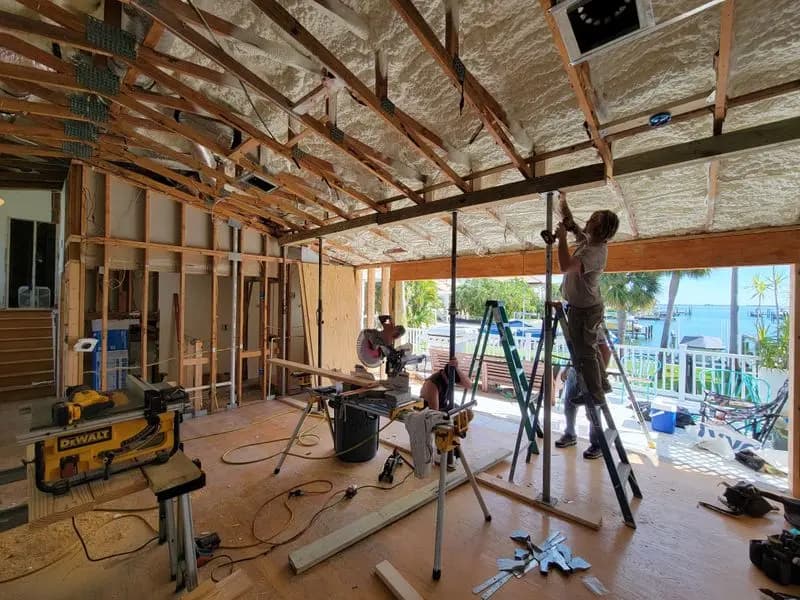
How to Actually Decide What to Do (the Value-not-Price Conversation)
The honest framing for any St. Pete homeowner thinking about a remodel as resale prep:
Step 1: Talk to a real estate agent and an appraiser before you talk to a contractor.
Both of those professions can answer questions a general contractor can't: what your specific house's after-repair value is likely to be, what buyers in your specific neighborhood are actually paying for, and whether the buyer pool would value a remodel at all vs. preferring an unrenovated house at a lower price. Without that input, every Cost vs. Value percentage is theoretical.
Step 2: Reframe the conversation from price to value.
Per Jeremy on the most common homeowner misconception: "One of the largest misconceptions is always going to be that they should be driven by price. It shouldn't be as much of a price conversation as it should be a value conversation. The low-cost provider is typically not going to deliver at a high level for people." Same logic applies to choosing which remodel — the cheapest remodel isn't necessarily the highest-recoup one.
Step 3: Tailor scope to priorities, not the listicle ranking.
Per Jeremy: "While it's very easy to say that you shouldn't choose the cheapest person, when we open the discussion up to center it on value — it's not that we're asking you to spend more money. We would tailor the scope to accomplish your highest priorities while also fitting our cost of doing business into that scope. A contractor that says yes and over-promises is only going to get into trouble with a budget that gets blown or a project that is severely compromised by having to cut corners." On a resale-prep remodel, "highest priority" is usually a combination of (a) what the inspection report flags as a buyer-objection issue, (b) what the agent says will move the offer band, and (c) what the cost base supports.
Step 4: If you decide to remodel, get the cost transparency that matches the decision.
Revolution's standard model is Time & Materials with weekly open-book budget reports. That means a homeowner trying to make a "does this pencil" decision can see actual costs as they accrue, not at month-end. We run in-house W-2 carpenters (not a paper contractor with day-labor crews), which keeps quality continuity on the kind of finish work that drives resale-buyer first impressions. Design coordination is handled in-house when scope warrants; we're not a design-build firm in the architect-on-staff sense.
What we don't do:
- We don't tell you what your house will be worth after the remodel — that's an appraiser's call.
- We don't tell you what your specific neighborhood's buyers will pay extra for — that's a real estate agent's call.
- We don't quote a single ROI percentage and stand on it — too much of the variance is project-specific and house-specific.
What we do:
- We can scope the construction side of any remodel category — kitchen, bathroom, exterior, additions, whole-house — across Pinellas, St. Pete, and the beaches.
- We can show you our cost model line-item-by-line-item so the "does this pencil" math has real numbers in it.
- We can flag the trade-offs the published ROI articles skip — flood-zone 50% rule, pre-1990s structural rework, permit timeline, "live-in-it" stress reality.
If you want to have that conversation, the qualifying call takes 15 minutes. (727) 888-6161. We'll be honest about whether your project is in our scope and what the realistic cost band is for the remodel category you're considering.
Frequently Asked Questions
Which home remodel has the highest ROI in 2026?
The latest Remodeling Magazine Cost vs. Value Report (2024 South Atlantic data) consistently ranks garage door replacement at the top nationally, but that's a national average. In St. Pete the sustained winners are kitchen refreshes, midrange bathroom remodels, and exterior/curb-appeal upgrades. Cite the report by name; don't quote a single percentage without the year + region qualifier.
How much value does a kitchen remodel add to a St. Pete home?
Depends on tier and house. Per Jeremy: "an entry-level basic RTA cabinet setup might be in the $40,000 to $60,000 range for the kitchen, and then $75,000 to $100,000 and up for a larger, nicer kitchen." Resale recovery on a midrange kitchen averages 70-80% nationally per Cost vs. Value; in St. Pete, the variance is driven by neighborhood (Old Northeast premium vs. mid-Pinellas baseline) and buyer pool.
Are bathroom remodels worth it for resale?
Yes for midrange scope; no for over-improvement. Cost vs. Value's midrange bathroom remodel typically recovers 65-75%. In Pinellas the trade-off is the older housing stock — pre-1990s plumbing surprises (cast iron) can blow a fixed-bid bathroom budget by 20%+ before you see resale impact.
Does a pool add value to a Florida home?
Less than people think, and the trade-off (insurance, maintenance, liability) often nets out flat. National ROI estimates on pools sit in the 50-65% range; we see this confirmed on Pinellas resales. A pool is a lifestyle decision, not an ROI decision.
Should I remodel before selling, or sell as-is and let the buyer remodel?
Depends on neighborhood, finish-tier of comps, and how much surprise risk is in the house. We tell most clients: have the conversation with a real estate agent + appraiser FIRST. Per Jeremy: "It shouldn't be as much of a price conversation as it should be a value conversation. The low-cost provider is typically not going to deliver at a high level for people." Same logic applies to a remodel-vs-sell-as-is decision.
Talk to Us About a Remodel That Actually Pencils
If you're weighing a remodel as resale prep on an Old Northeast bungalow, a Snell Isle waterfront, a downtown St. Pete condo, a Shore Acres flood-zone house, or anywhere else in Pinellas + St. Pete + the beaches, we're happy to talk through the construction side. Call (727) 888-6161 for a 15-minute qualifying call, or see our whole-home remodel scope.